
Variable frequency drives: run motors only as fast as you need.
Many pumps and fans run at full speed and are throttled with valves or dampers. A variable frequency drive slows the motor instead, and because power falls steeply with speed, the savings can be large.
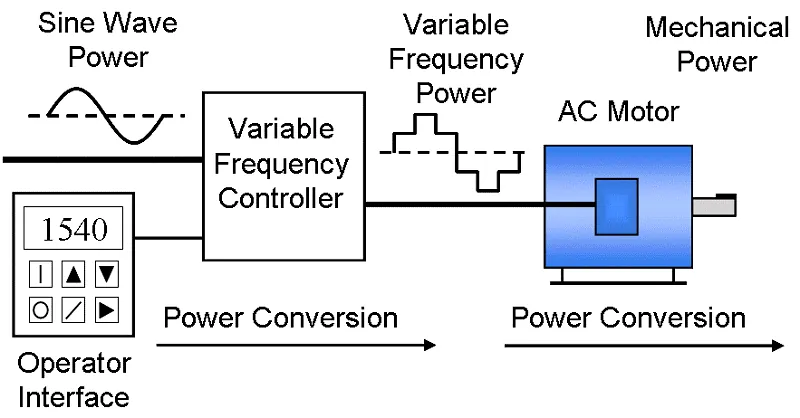
How a VFD works
An AC induction motor's speed is set by the supply frequency and its number of poles. A variable frequency drive (also called a variable speed drive) converts the fixed 50 Hz supply into a variable frequency and voltage, so the motor's speed can follow the real demand of the process.
Why speed matters so much
For centrifugal pumps and fans, the affinity laws mean the power needed varies roughly with the cube of speed. Running a fan at 80% speed takes only about half the power of running it at full speed (0.8³ ≈ 0.51). Throttling with a valve or damper, by contrast, wastes much of that energy across the restriction.
Good candidates for a drive
- Pumps and fans controlled by throttling valves, dampers or bypass loops
- Air handlers, cooling towers and chilled-water pumps
- Compressors and process loads with varying demand
- Conveyors and mixers that don't need full speed all the time
Drives also give a soft start, which reduces mechanical stress and starting current. Because drives are non-linear loads, we check harmonic levels and specify filtering where needed.
Before we recommend anything, a feasibility study measures your site and estimates the saving. After installation, savings are measured and verified to IPMVP and reported monthly.
From measurement to verified savings.
Every measure follows the same process, and can be bought outright, leased or delivered under an Energy Savings Performance Contract with no upfront capital.
- Feasibility studyAnalysis of the facility's energy consumption, losses and savings potential.
- EngineerTechnical design and a bankable business case covering investment, savings and payback.
- FinancingSupport in securing financing, including the documentation lenders require.
- ImplementProcurement, installation and commissioning by our own engineers.
- VerifySavings measured to IPMVP on our EnMIS platform, reported monthly.
- MaintainPreventive maintenance for the full contract term, so that savings are sustained.
Frequently asked questions
Which motors benefit most from a VFD?
Variable-torque loads such as centrifugal pumps and fans with long running hours and varying demand. Constant-torque loads gain less from speed reduction.
Do VFDs create harmonics?
Yes, drives are non-linear loads. We assess harmonic levels and include filtering where needed to protect the rest of the installation.
How are VFD savings verified?
We meter the motor before and after the drive is installed and calculate savings to IPMVP, adjusting for changes in operating hours or production.
Related services and technologies.
Pumps and fans running flat out?
Tell us about your motors and we'll identify where drives would pay back fastest.