
Voltage optimisation: supply equipment with the voltage it needs.
Equipment is often supplied with a higher voltage than it needs. Voltage optimisation brings the site supply down to the optimum level and holds it steady, reducing wasted energy and wear on equipment.
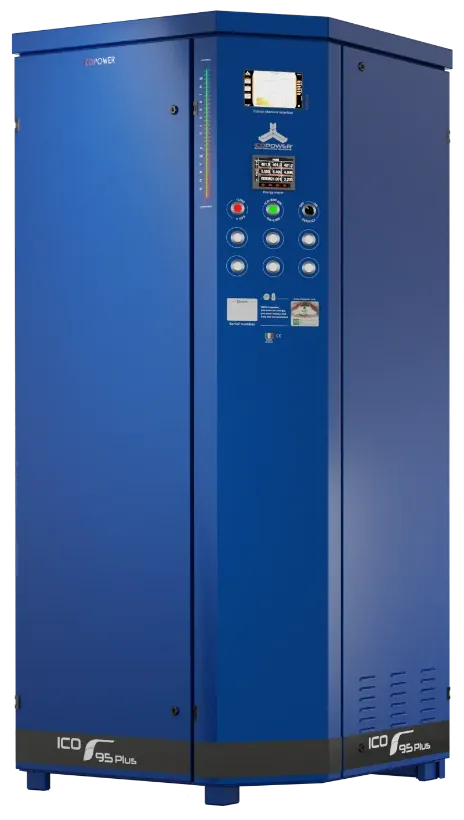
What is voltage optimisation?
Voltage optimisation is an umbrella term for technologies that stabilise, regulate and reduce the voltage supplied to a site. Electrical equipment is built to work across a voltage range. When the supply sits at the top of that range, many loads draw more power than they need, run hotter and wear out sooner.
Low-voltage supplies in East Africa and the Indian Ocean are nominally 240 V single-phase and 415 V three-phase, and the actual voltage can drift well above or below nominal through the day. An optimiser installed after the main incomer corrects the voltage to a set level and holds it there, whatever the grid does.
Where it saves energy
Savings depend on what the voltage feeds. Loads whose consumption rises with voltage benefit most:
- Lighting, especially older fluorescent and discharge fittings
- Lightly loaded induction motors on pumps, fans and conveyors
- Refrigeration and cold rooms
- Sites where the incoming voltage is consistently high
Loads that simply draw more current to deliver a fixed output, such as thermostatically controlled water heaters, see little benefit. That is why we measure first: a feasibility study logs the site's voltage profile and load mix and estimates the saving before any investment is made.
More than savings
A stable voltage also protects equipment from over-voltage and sags, reduces nuisance tripping and extends the life of lamps, motors and electronics. Under our Energy Savings Performance Contracts, voltage optimisation units, surge protection and reactive power compensation are maintained for the full contract term.
Before we recommend anything, a feasibility study measures your site and estimates the saving. After installation, savings are measured and verified to IPMVP and reported monthly.
From measurement to verified savings.
Every measure follows the same process, and can be bought outright, leased or delivered under an Energy Savings Performance Contract with no upfront capital.
- Feasibility studyAnalysis of the facility's energy consumption, losses and savings potential.
- EngineerTechnical design and a bankable business case covering investment, savings and payback.
- FinancingSupport in securing financing, including the documentation lenders require.
- ImplementProcurement, installation and commissioning by our own engineers.
- VerifySavings measured to IPMVP on our EnMIS platform, reported monthly.
- MaintainPreventive maintenance for the full contract term, so that savings are sustained.
Frequently asked questions
Will voltage optimisation work on my site?
It depends on your voltage profile and the mix of loads. We log both during a feasibility study and only recommend the measure where the expected saving justifies the investment.
Does lowering the voltage harm equipment?
No. The voltage is set within the range equipment is designed for, and stabilising it protects equipment from over-voltage and sags.
How are the savings proven?
Savings are measured and verified to the International Performance Measurement and Verification Protocol (IPMVP) and reported monthly on our EnMIS platform.
Can voltage optimisation be paid for from the savings?
Yes. Under an Energy Savings Performance Contract there is no upfront capital; we are paid from part of the verified savings.
Related services and technologies.
Is your site over-voltage?
We'll log your supply voltage and loads and tell you what voltage optimisation would save, before you commit to anything.